Practical info
Getting a SIM in Tokyo
Tokyo will let you get away with no SIM for about half a day. The first time it stops letting you get away with it is usually a small alley somewhere in Yanaka, when Google Maps quietly stops loading and you realise the 7-Eleven Wi-Fi from two blocks ago is not, in fact, following you around. Don't be that person. I've been that person.
Sakura Mobile pays Tokyo Unseen a small commission if you sign up through the links below — clearly marked (sponsored). The price is the same for you. See the full disclosure.
TL;DR
- Most visitors: Sakura Mobile (sponsored). Physical SIM or eSIM, English support, ships to your hotel or pick up at Narita / Haneda. Uncapped data on the normal plans. Done in ten minutes. From JPY 3,300 (eSIM 4-day) · JPY 3,850 (physical SIM) · JPY 329/day (pocket WiFi).
- Pure eSIM minimalists who already use Airalo elsewhere: keep using Airalo. It works. Tokyo Unseen is not yet on the Airalo affiliate program, so this is a clean recommendation.
- Wi-Fi-only: please don't.
What I actually use: Sakura Mobile
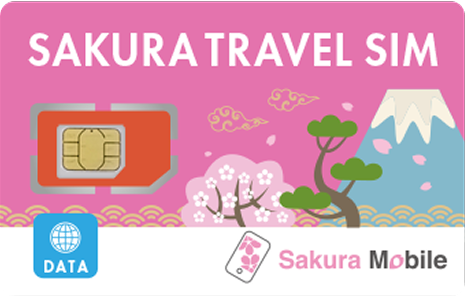
I keep a Sakura Mobile data SIM in a second handset for visitors I'm hosting. The pattern is always the same: the friend lands, drops their bag at the hotel, meets me in Asakusa, then realises around the Hozomon gate that they cannot, in fact, post the photo they just took. Pulling out a SIM I've already activated and saying "here, swap this in" has saved more first evenings than I can count.
The reasons it earns the default slot:
- Physical SIM and eSIM, so you choose based on your phone, not on what the brand felt like selling that quarter.
- English customer support that actually answers. I've watched a friend get a replacement eSIM activated by reply email at 11pm on a Sunday. Japanese carriers do not move at this speed.
- Pickup at Narita / Haneda or shipped to your hotel — both work, both are stress-free. The hotel option is the calmer version: the SIM is waiting at the front desk when you check in, which is one fewer airport queue at the end of a long flight.
- Uncapped data on the normal tiers. "Unlimited" in Japan often comes with a polite asterisk; Sakura's normal plan actually holds up for a week of Tokyo Unseen-style walking with Google Maps and IG open simultaneously.
- No Japanese phone number / address required. Most domestic carriers will quietly stop the conversation when they ask for a residence card. Sakura is built for the visitor case.

The eSIM alternative: Airalo (and why I'm not pushing it)
If you already have Airalo installed on your phone from a Bangkok or Lisbon trip, you do not need to switch. The Japan packs work, the QR install is the usual two-tap thing, and the speeds are fine for navigation and IG.
Tokyo Unseen is not yet in the Airalo affiliate program — so when I tell you it works, there's no commission attached. I'd rather you have that information than pretend the choice is simpler than it is.
Where Sakura still has the edge for first-time Japan visitors: English-speaking humans on the other end if anything goes wrong, and a physical SIM option for older phones that don't support eSIM. If neither of those matter to you and you already trust Airalo, just use Airalo.
The free Wi-Fi math (why "I'll just use 7-Eleven" doesn't work)
Yes, Tokyo has a lot of free Wi-Fi. Stations, convenience stores, Starbucks, government hotspots. On paper this looks like enough.
In practice, the moments you most need data are the moments you are not standing inside a 7-Eleven:
- Walking the back alleys of Yanaka looking for a kissaten the guidebook didn't list.
- Trying to translate the entrance sign of an izakaya that has no English menu (which is, usually, the good kind).
- Calling a taxi at 1am because the last Yamanote train just left and you're a 40-minute walk from your hotel.
- Splitting a dinner bill three ways with people who pay in different currencies.
Tokyo Unseen exists specifically to send you down those alleys. The site is, in a small way, anti-7-Eleven-Wi-Fi by design.
What it actually costs
No marketing-language gymnastics. Tax-included starting prices, direct from Sakura's published rate card.
| Product | From | Good for |
|---|---|---|
| Travel eSIM (4-day, au 5G) | JPY 3,300 | Modern phone, want it before you land |
| Travel physical SIM (au 5G or docomo 4G) | JPY 3,850 | Older / locked-out phone, or hotel delivery |
| Travel Pocket WiFi (docomo) | JPY 329 / day | Group of 2-5, sharing one device |
| Monthly Voice + Data (1-month minimum) | JPY 3,278 / mo | Longer stay, need a Japanese number |
| Monthly Data-Only SIM/eSIM | JPY 2,728 / mo | Tablet, second phone, backup line |
Bundle 2+ products in a single order and you get the standard 10% multi-product discount. No coupon code, applied automatically.
Hidden perks worth knowing
- Student discount. Show a valid student ID and Sakura knocks JPY 1,100 off the activation fee. Not advertised loudly; ask if you qualify.
- Loyalty perk. Add a second monthly item to your plan and the initial fee on that second item is discounted. Stack a Data-Only SIM with a Voice+Data line, for example.
- Zero risk on monthly plans. One-month minimum, no termination fee, no two-year contract. The Japanese carriers' long-tail-of-pain model does not apply here.
- International cards accepted. US, UK, EU credit and debit cards work; no need for a Japanese card, which is the usual silent gatekeeper for domestic plans.
Picking a plan length
For the most common case (4-14 day trip), the rule of thumb is shorter than people expect:
- Trip under 5 days: the shortest plan. You won't finish the data; that's fine.
- 5-15 days (the modal Tokyo trip): their two-week plan is priced for this exact case.
- 2-4 weeks (longer or repeat visit): the monthly plan; cheapest per-day rate.
- Longer than that: you are no longer visiting Tokyo, you are trying out Tokyo, which is its own wonderful problem. Talk to them about a longer-term plan.
Pickup options:
- Narita and Haneda counters — practical if you've landed and want it in your pocket before the train ride into the city.
- Shipped to your hotel — calmer; the front desk hands it to you when you check in. Recommended for first-time visitors who want one less airport thing to do.
- eSIM, delivered by email — the lowest-friction version if your phone supports it. You can install it before the plane lands.
Installing it
Physical SIM: pop tray, swap card, restart phone. The instruction sheet in the envelope is in English. The whole thing takes longer to photograph than to do.
eSIM: scan the QR code from the activation email, follow the iOS or Android prompt, switch your default cellular line to the new one. The one mistake people make is forgetting to turn off their home carrier's data roaming after activating the eSIM, then wondering why a $40 charge appeared from their US carrier later. Don't be that person. (I've also been that person, internationally, twice.)
FAQ
Can I make calls?
The Sakura data plans don't include voice. For visiting Tokyo, this is a non-issue: WhatsApp / LINE / FaceTime / Google Meet over data cover essentially every call you actually want to make. Hotels, restaurants, and taxis can all be reached by app or by the restaurant booking your table for you.
Is there a deposit or contract?
No deposit, no rolling contract. You order a plan, you use it, it ends.
Will it work in the countryside / day trips?
Yes. Sakura runs on the major Japanese network coverage, which is the same coverage you get from a domestic carrier. Hakone, Nikko, Kamakura, the Yamanashi vineyards, all fine.
What if I'm only here three days?
Get the shortest plan anyway. Nobody finishes a Tokyo trip thinking "I really wish I'd had less data." A lot of people finish thinking the opposite.
Bottom line
Sakura Mobile (sponsored) for almost everyone. Airalo if you already live in it. Free Wi-Fi if you'd like to spend your Tokyo trip standing inside convenience stores. The choice is more lopsided than the internet usually pretends.
See also: Planning a visit to Tokyo for the rest of the practical layer (transit, when to come, more soon).